 Main Menu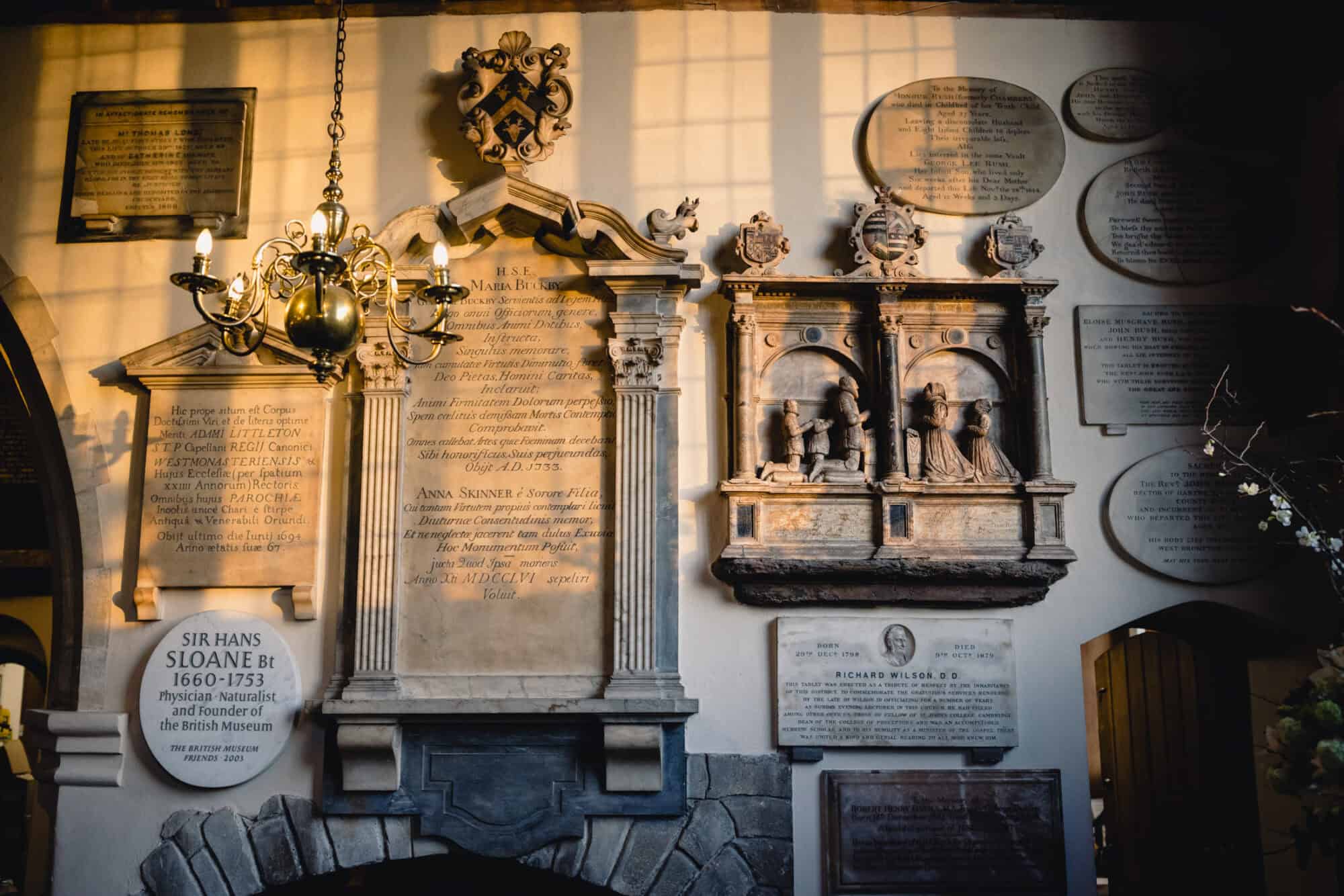
The Church has a team of Church Guides on Sunday afternoons from 1.30 – 5.30 pm, to welcome visitors and to give an introduction and guidance on the history and monuments of the Church. We are often busy with passers-by intrigued by the building and keen to learn more.
We are looking for additional church guides to join the existing team, either on a regular basis, or as an occasional/reserve guide. If that sounds like something you’d enjoy, please contact Juergen Schuhmacher guiding@chelseaoldchurch.org.uk or via the parish office. If you know a fellow church member who would be willing to come on board please, why not encourage them along too?
A brief tour of the Church
Visitors will hear about its long history (going back to 1150) and the famous monuments, reflecting the turbulent times, mostly around the Reformation and thereafter.
Among those here immortalised is Thomas More, named as one of “the most distinguished parishioners” of the Church. His career as Lord Chancellor, philosopher, diplomat, advisor to King Henry VIII, and a novelist (he wrote Utopia) is often the centre of interest to our visitors.
The More Family
The More Chapel, which Thomas More adapted for himself and where he and his family worshipped, is on the south side. Here you also find the famous drawing of More by Hans Holbein, the Renaissance artist, who stayed as a guest with the More family. The More capitals in the More Chapel are also said to be the design of Holbein, depicting his credentials in Church and State.
More’s oldest daughter, Margaret Roper, is commemorated on the east wall of the Chapel.
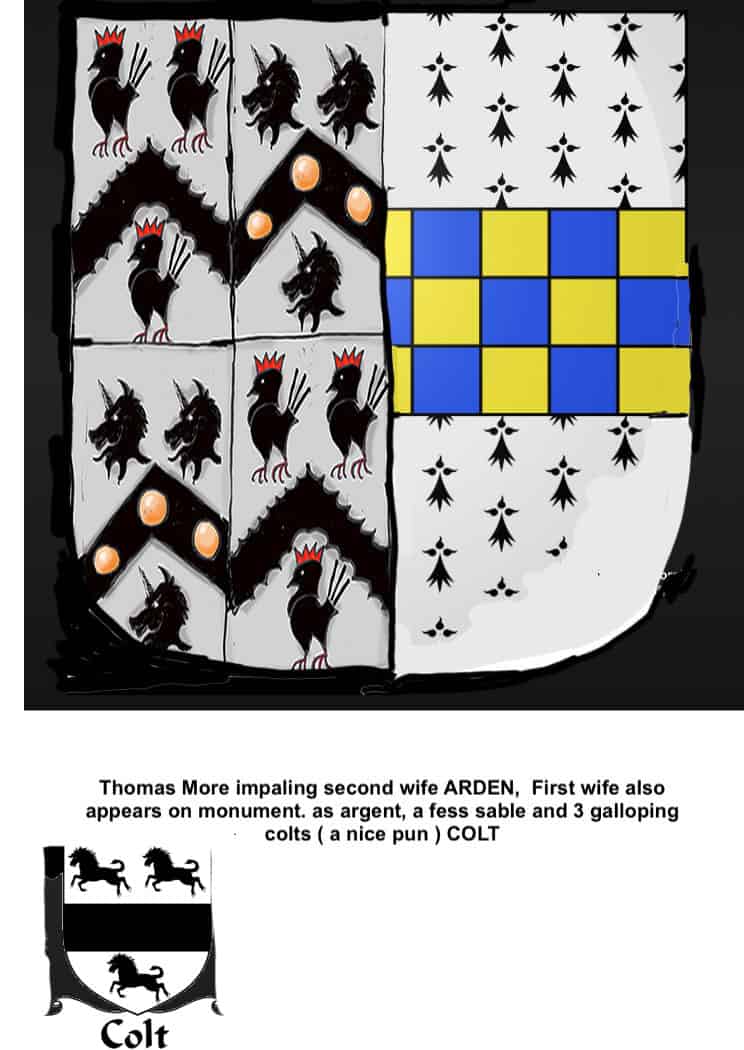
Around the corner from there, in the Sanctuary we find the More family tomb, dated 1532, which More had built. Inscribed on black marble we find his testament, stating that he wanted to be buried there with his first and also his second wife. He was executed as a heretic three years later, illustrating how he owed his fame and fall to King Henry VIII and the Reformation.
The Bray Family
Opposite the More tomb is that of the Brays, and one of the oldest in the church. It commemorates Richard Bray and his family. Towards the end of the battle of Bosworth Field in 1485 his son Reginald found Richard III’s crown in a thorn bush. This was given to the Earl of Richmond who became Henry VII, the first Tudor monarch. Reginald was knighted and amongst his achievements are the design and construction of Henry VII’s Chapel at Westminster Abbey, and St. George’s Chapel Windsor.
The Jervoise Monument
The Jervoise Monument, in the form of a triumphal arch at the entrance to the Lawrence Chapel, commemorates Richard Jervoise (died 1557) and his son, also named Richard. With its frieze and shield of arms, its dominating presence is hard to miss.
The Tomb of Lord and Lady Dacre
The most magnificent tomb in the Church is that of Lord and Lady Dacre (1595), carved in alabaster and set in a recess on the south side. The tomb, protected by the original railings, is surmounted by the symbols of Time, Death and Judgement. Lady Dacre founded the Emanuel Charity to support the poor, which still remains as the Emanuel School in Battersea.
Lady Jane Cheyne
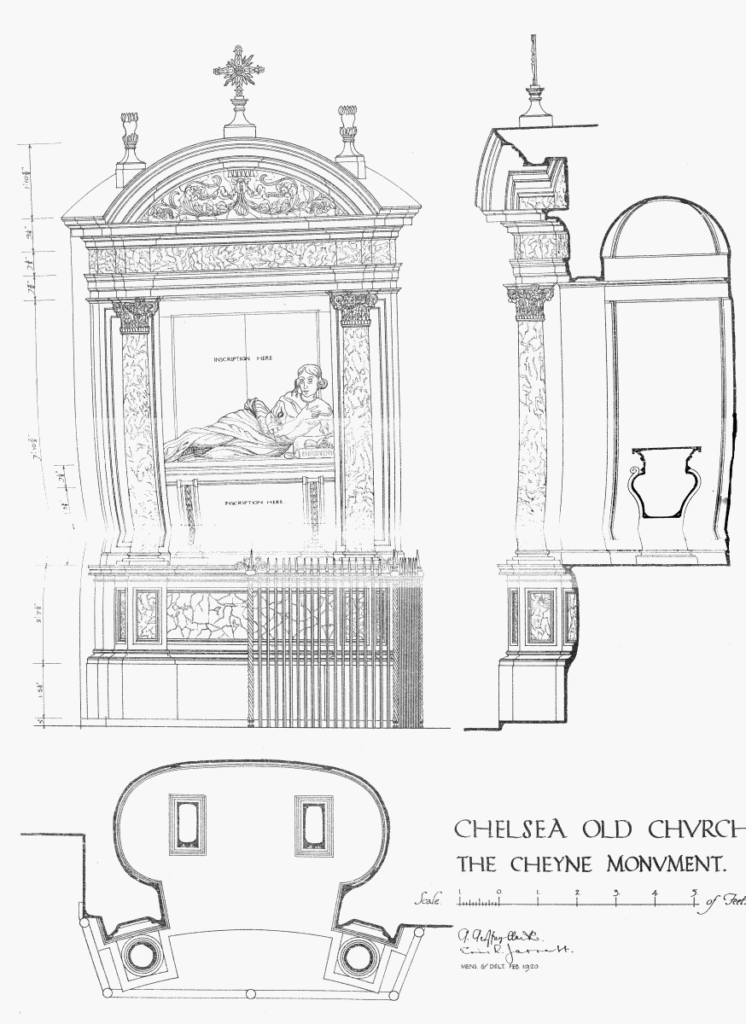
Lady Jane Cheyne (1669) is commemorated in a magnificent Roman baroque-style monument in a recess on the north wall. Her reclining figure rests on a sarcophagus of black marble with Corinthian columns on either side. The light from the window above renders this life-size sculpture better visible to visitors. She was a great benefactor to the Church and contributed to its rebuilding.
The Church holds a cabinet of chained books, which is a rarity amongst churches in London. There is also the font (1673), which is used at baptisms, and there are many more tablets and monuments.
Finally, enjoy our unique riverside location, where for centuries Chelsea Old Church was the only Church between Hampton Court Palace and Westminster.