 Main Menu
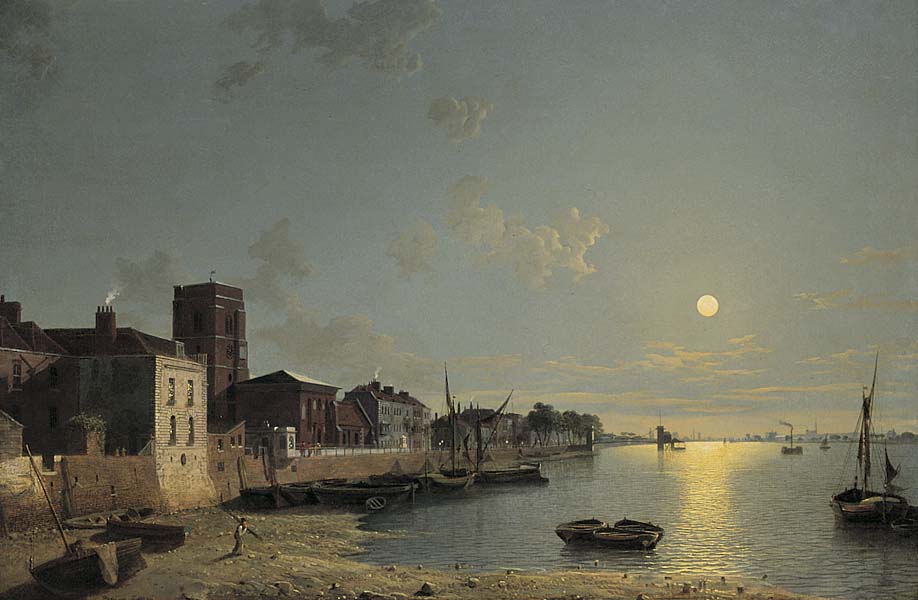
As early as the fourth millennium BC this spot on the river Thames was a place of pilgrimage, ritual offerings, and ceremonial burial. However, it was in 1120 that Pope Nicholas Breakspear granted the church to the Abbot and Monastery of Westminster. As Chelsea’s parish church, it was originally dedicated to All Saints, although by the end of the 17th century the dedication changed to St Luke. When, in 1824 Valerian Wellesley built the new St Luke’s in Sydney Street, this church became St Luke’s Parish Chapel, informally known as ‘The Old Church’.
In the 1520s, Sir Thomas More bought land between the King’s Road and the River Thames and built a large house crossing over what is now Beaufort Street. More is known to have sung in the church choir and assisted at mass. He also rebuilt the chapel on the south side of the chancel for his private use – one Holbein capital showing the date 1528. Both More’s wives are buried in the tomb which More personally designed for himself and his family on the south side of the chancel
King Henry VIII often visited Thomas More in Chelsea and in 1536 he bought Chelsea Manor from Lord Sandys. Henry rebuilt the Manor and several of his Queens and the Princess Elizabeth (later Elizabeth I) and Lady Jane Grey stayed there, worshipping in the Manor’s chapel on the north side of the chancel. In the years from 1541 – 1557 Queen Catherine Howard, Anne of Cleves, and Queen Catherine Parr lived there at different times.
By 1627, the altar table and rails conformed to an edict from the Bishop of Norwich, which stated that the rails should be ‘so thick with pillars that dogges may not get in’. In the same year John Donne, poet and Dean of St Paul’s, preached at the funeral of his close friend, Magdalene Danvers, mother of the poet George Herbert. A century later John Wesley preached in the same pulpit. Sir Hans Sloane worshipped here when he moved to Chelsea Manor in 1742, his vast collection of artefacts forming the foundation for the British Museum and the Chelsea Physic Garden. Elizabeth Blackwell, Mary Astell, Tobias Smollett and Henry James all worshipped here; James McNeill Whistler’s and Henry James’ funerals were held here and T. S. Eliot is remembered as coming to church in his slippers.
During the Second World War, the church was bombed to the ground and the congregation built it back again ‘as it was, where it was’. In the early twentieth century, a schoolboy wrote of Chelsea Old Church,
‘Can it be said that buildings have personalities? A building can never be a person but it can be personal and I remember being immediately conscious that this was a happy building’.
For almost a millennium men and women have come here week by week to share their joys and sorrows. Together with the faithful worship of former royalty, artists and writers, the prayers of the present congregation make it the sacred place it is.
Here is a selection of Old Church’s many photos and works of art: